
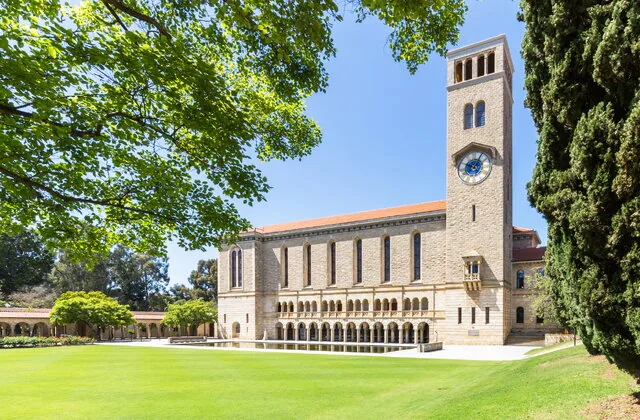
Iconic landmarks, vibrant cities, and top-tier educational institutions make Australia one of the most sought-after destinations for international education.
Australia continues to stand out as a top choice for Indian students seeking world-class degrees, high living standards, and potential post-study work pathways. Home to many of the world's highest-ranked universities, Australia offers cutting-edge research, hands-on learning, and an enviable lifestyle.
Here is a full, step-by-step guide covering everything you need to know about higher education in Australia.
- Top Universities & Academic Landscape
- Admission Process & Subclass 500 Student Visa
- Financial Requirements & Budgeting Breakdown
Top Universities & Academic Landscape
Australia boasts a rich academic ecosystem, highlighted by prestigious research universities and technology-focused institutions across major cities like Melbourne, Sydney, Brisbane, Perth, and Adelaide.
Historic and modern university campuses across Australia offer world-class study facilities and vibrant student communities.
The Group of Eight (Go8)
Australia's premier coalition of research-intensive universities includes:
- The University of Melbourne (Top choice for Business, Data Science, and Medicine)
- The University of Sydney (Renowned for Law, Humanities, and Engineering)
- The Australian National University (ANU), Canberra (Leading in Public Policy, Science, and International Relations)
- The University of Queensland (UQ), Brisbane (Pioneer in Biotechnology and Environmental Science)
- Monash University, Melbourne (Known for Pharmacy, Engineering, and Business)
- UNSW Sydney (Global leader in Technology, Renewable Energy, and Finance)
- The University of Western Australia (UWA), Perth (Top choice for Mining, Geology, and Energy)
- Adelaide University (formed in 2026 from the University of Adelaide and the University of South Australia; check current course offerings)
Australian Technology Network (ATN) & Regional Universities
- Institutions like RMIT University, UTS (University of Technology Sydney), QUT (Queensland University of Technology), and Curtin University specialize in practical, industry-aligned coursework with strong internship tie-ups.
- Regional universities like Deakin University (Geelong), University of Wollongong, and University of Newcastle offer high-quality education along with extended post-study work incentives.
Admission Process & Subclass 500 Student Visa
Applying to study in Australia is systematic, with two major intakes: Semester 1 (February/March) and Semester 2 (July/August). Some universities also offer a T2/T3 Trimester intake (November).
Preparing academic transcripts, English proficiency tests, and genuine student documentation is essential for Australian visa processing.
Key Admission Steps
- Academic Eligibility: 60%–85%+ in Grade 12 for Undergraduates; recognized Bachelor's degree (First Division) for Postgraduates.
- English Language Proficiency: IELTS (minimum 6.5 overall, no band less than 6.0), TOEFL iBT, or PTE Academic.
- Genuine Student (GS) Requirement: Replaced the old Statement of Purpose (SOP) framework. Applicants must answer targeted questions proving genuine intent to study in Australia, detailing career plans and course relevance.
- Offer Letter & Confirmation of Enrolment (CoE): Once accepted, pay your first-semester tuition deposit and overseas health coverage to receive your official CoE.
Subclass 500 Student Visa Breakdown
To secure your Subclass 500 visa, you must satisfy financial, medical, and character requirements:
- Proof of Funds: Show evidence of financial capacity to cover travel, 1 year of tuition fees, and 1 year of living costs (the official Department of Home Affairs financial requirement stands at approximately AUD $29,710 for living expenses).
- Overseas Student Health Cover (OSHC): Mandatory health insurance for the entire duration of your visa (approx. AUD $600 – $750 per year).
- Biometrics & Health Examination: Medical check-ups through panel physicians in India before visa lodge or upon request.
Financial Requirements & Budgeting Breakdown
Understanding tuition fees and daily expenses ensures a smooth transition to life in Australia.
Creating a balanced monthly budget helps manage tuition payments, housing, and living expenses.
| Expense Category | Annual / Monthly Cost (AUD) | Equivalent Cost in INR (Approx.) |
|---|---|---|
| Undergraduate Tuition Fees | AUD $32,000 – $48,000 / year | ₹17.5 Lakhs – ₹26.5 Lakhs / year |
| Postgraduate / Master's Tuition | AUD $35,000 – $52,000 / year | ₹19.2 Lakhs – ₹28.6 Lakhs / year |
| Vocational (TAFE) Courses | AUD $14,000 – $22,000 / year | ₹7.7 Lakhs – ₹12.1 Lakhs / year |
| Shared Apartment Rent (Off-Campus) | AUD $700 – $1,300 / month | ₹38,500 – ₹71,500 / month |
| On-Campus Student Accommodation | AUD $1,100 – $1,800 / month | ₹60,500 – ₹99,000 / month |
| Groceries & Food | AUD $350 – $550 / month | ₹19,250 – ₹30,250 / month |
| Public Transport (Student Pass) | AUD $120 – $220 / month | ₹6,600 – ₹12,100 / month |
| Mandatory Health Insurance (OSHC) | AUD $600 – $750 / year | ₹33,000 – ₹41,250 / year |
Note: Conversion calculated at 1 AUD ≈ 55 INR.
Accommodation Options

Furnished student accommodation units offer comfortable private study environments and shared living amenities.
- On-Campus University Colleges/Residential Halls: Fully furnished rooms located directly on campus grounds. Includes utility bills, internet, and often meal plans, ideal for first-year undergraduate students.
- Purpose-Built Student Accommodation (PBSA): Managed private residences like Scape, Iglu, and Unilodge. Features modern facilities including study rooms, gyms, social events, 24/7 security, and proximity to campuses.
- Shared Houses & Private Rentals: Master’s students often rent private rooms in multi-bedroom houses or apartments via verified rental platforms, sharing costs with fellow students.
- Homestay: Living with an Australian host family, providing a welcoming home environment with included home-cooked meals and language immersion.
Part-Time Work, Post-Study Work Rights & Careers
Australia offers generous work authorization policies that help students gain professional experience while financing their living costs.
Earning an accredited Australian degree opens pathways to global career opportunities and post-study work rights.
Major Australian financial and tech districts in Sydney, Melbourne, and Brisbane offer extensive corporate internship opportunities.
Part-Time Work Rules
- International students on a Subclass 500 visa can legally work up to 48 hours per fortnight (every two weeks) during study sessions.
- During official university holiday breaks, students can work unlimited hours.
- Minimum wage in Australia is among the highest in the world (approx. AUD $24.10+ per hour plus superannuation).
Temporary Graduate Visa (Subclass 485): Post-Higher Education Work Stream
Eligible Indian nationals may apply for the Subclass 485 Post-Higher Education Work stream. Under the Australia–India arrangements, the following stay periods apply, subject to a successful application:
- Bachelor’s degree (including honours): up to 2 years; first-class honours in STEM, including ICT: up to 3 years.
- Master’s degree (coursework, extended or research): up to 3 years.
- Doctoral degree (PhD): up to 4 years.
- Eligibility includes the Australian study requirement, recent course completion, eligible visa status and English requirements. Applicants generally must be 35 or younger; those using a research master’s or PhD may apply while under 50. A visa or job is not guaranteed.
- Regional study and residence may support a separate Second Post-Higher Education Work stream application; additional stay is not automatic.
Check Home Affairs’ current stream and eligibility rules. Indian-national durations differ from the general arrangements. Stream changes took effect on 1 July 2024; reviewed 19 November 2026.
Lifestyle, Culture & Weather

Australia is renowned for its welcoming multicultural society, stunning outdoor nature, and exceptional work-life balance.
Australia's climate allows students to balance academics with outdoor activities, coastal life, and cultural events.
- Climate Variations: Australia spans multiple climate zones.
- Southern Cities (Melbourne, Adelaide): Four distinct seasons with cool winters (8°C–15°C) and hot summers (25°C–35°C).
- East Coast (Sydney, Brisbane): Mild winters and sunny, warm summers.
- Tropical North & West (Perth, Darwin): Warm year-round with tropical dry and wet seasons.
- Multicultural Community: Indian communities thrive across major Australian cities. Authentic Indian food, grocery stores, cricket clubs, and festivals like Diwali and Holi are widely celebrated.
- Safety & Living Standards: Australian cities consistently rank among the world's top 10 most liveable cities, boasting clean public transport, top medical infrastructure, and safe urban neighborhoods.
Essential Checklist for Indian Applicants
- Research Courses & Apply: Choose between Go8, ATN, or regional universities based on career goals.
- Fulfill Genuine Student (GS) Criteria: Prepare detailed answers demonstrating authentic study intentions.
- Take English Test: Clear IELTS/PTE Academic requirements for your target course.
- Secure Financial Proof & OSHC: Arrange proof of AUD $29,710+ living funds plus tuition deposit, and buy health insurance.
- Obtain Confirmation of Enrolment (CoE): Pay tuition deposit to receive CoE from the university.
- Apply for Subclass 500 Visa: Submit biometrics, complete medical tests, and finalize visa application.
- Book Flights & Housing: Reserve student accommodation prior to landing in Australia.
Plan your next step
Discuss your study-abroad options
Review course fit, entry requirements and budgeting with a counsellor.